This Coffee’s Journey
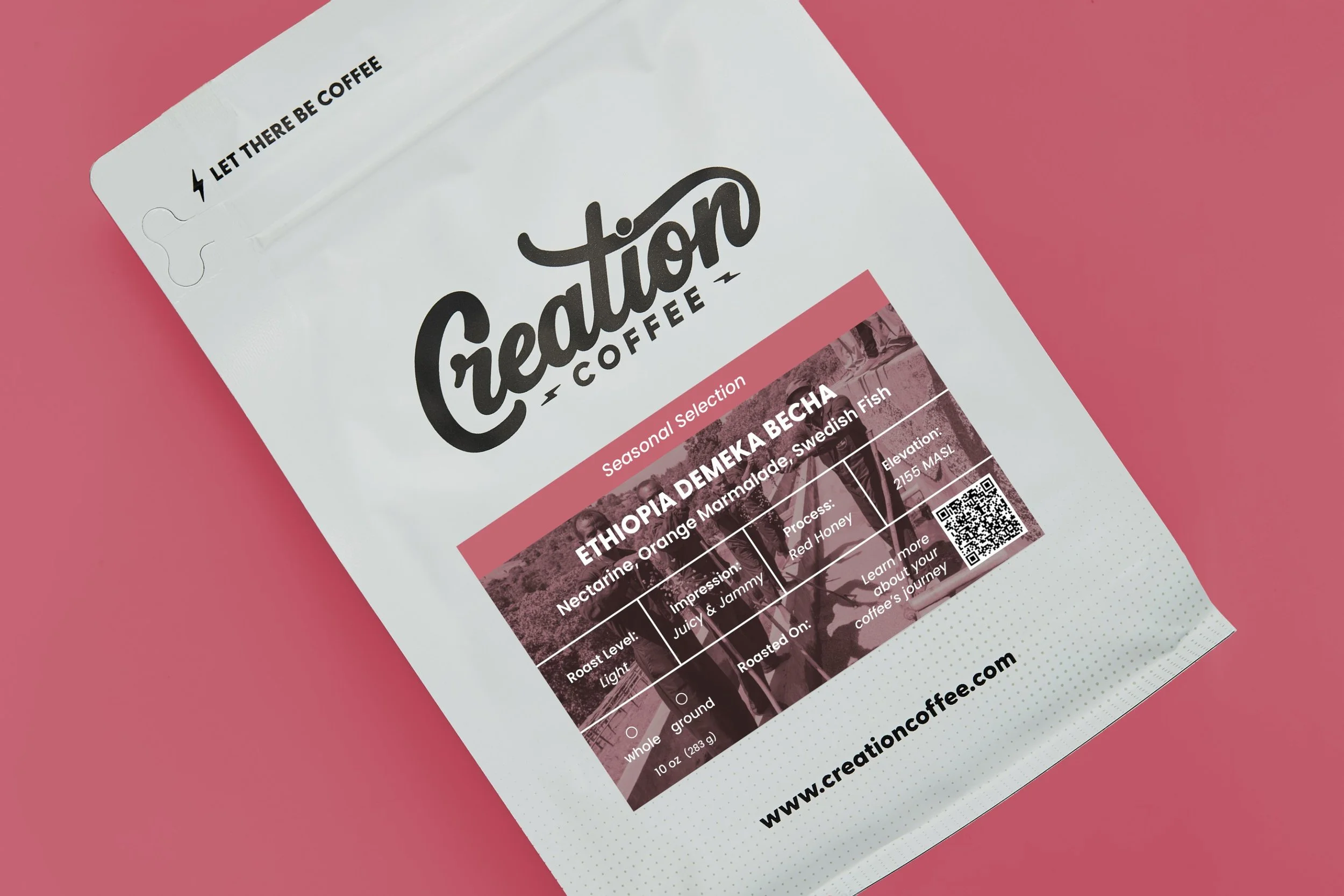
Ethiopia Demeka Becha
ORIGIN: Becha Village, Bona Zuria, Sidama, Ethiopia
PRODUCER: Demeka Becha, Ayele Tulu, Aron Fesaha
ALTITUDE: 2155 MASL
PROCESS: Red Honey
VARIETAL: 74/158, 74/165, 74/112, 74/110, and 74/40
The Demeka Becha site is owned by Ayele Tulu, a Sidama man who is deeply integrated into the local area of Bona Zuria. His son, Tsegab Ayele, manages the project. The heart, perhaps the true engine of the family, is Genet Haile Endeshow, Tsegab’s mother and Ayele’s wife. She fills up their lives and the home with her warmth, and her embrace expands to include everyone who has the privilege of working with the family and their coffee producing sites.
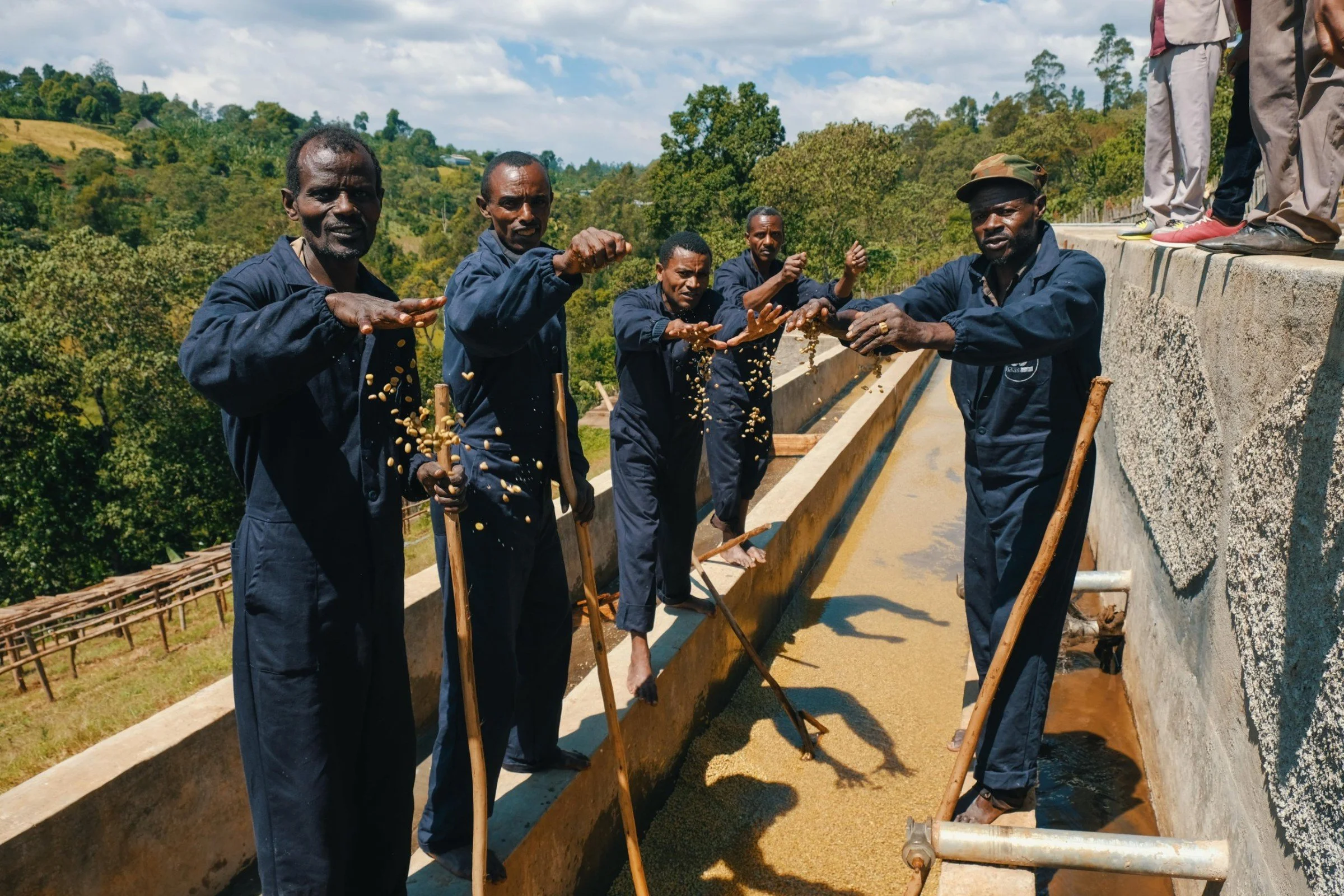
Demeka Becha site is situated at the top of a hill, which is ideal for air flow along the drying beds. You enter through tin gates which open onto lush green grass and, if you’re lucky, smiling day laborers lined up clapping and whistling their excitement at your visit. Demeka Becha site buys cherries from nearby communities including Dilla Suke, Demeka, Goacho, Becha, and Bashiro Dale—close to 10,000 producers are situated in the areas surrounding the washing station. Producers bring their cherries to be weighed on the blue scale, logged in the book by Cashier and General Manager, Alemu Gobaro, and floated before being dumped into the cement hopper to begin the journey through the 4-disk Agard pulper and into fermentation tanks and cement washing channels. There are 10 tanks for density grades 1 and 2, and 2 tanks for lower density coffee destined for our Community Lot program if it meets our standard, or for the local market. Following fermentation and washing, the parchment coffee is carried by hand to the drying beds where laborers spread it out to the depth of a fingertip and keep it turning until it is dried and moved to the locked storehouse to await trucking to Addis Ababa and final processing.